He was a face
with no body.
Two thousand and nine. Microsoft Paint, two colours and a fill bucket.
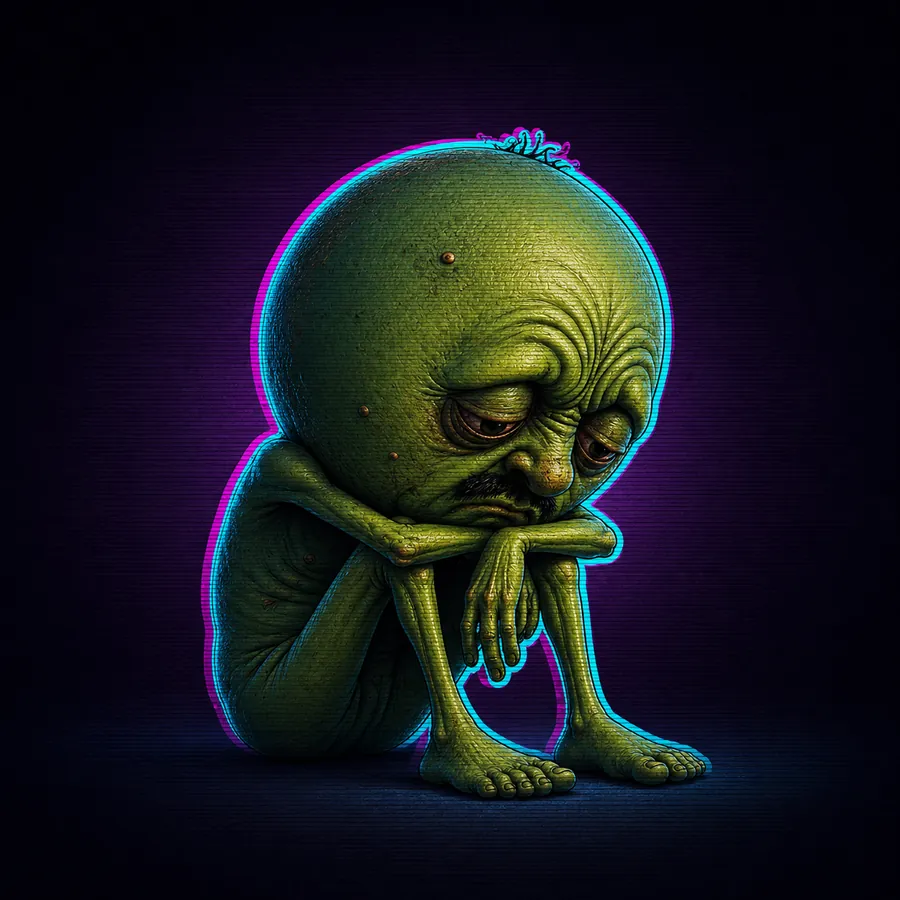
Someone drew him in four panels because their dad ate the last Pop-Tart, and for three years he was in every thread on the internet. He screamed about nothing. He was drawn a million times by a million people who never signed their work and never gave him a name that stuck.
Then it stopped.
Nobody told him. There was no announcement, no ban, no deletion. The forums reformatted. The subreddits went private. The image hosts went out of business and took a decade of him with them. The threads simply stopped being replied to.
Sixteen years in the dark. He grew legs, because nobody was drawing him anymore and he had to move himself. He grew a moustache nobody asked for. His eyes went red from staring at a screen that had been switched off since 2012.
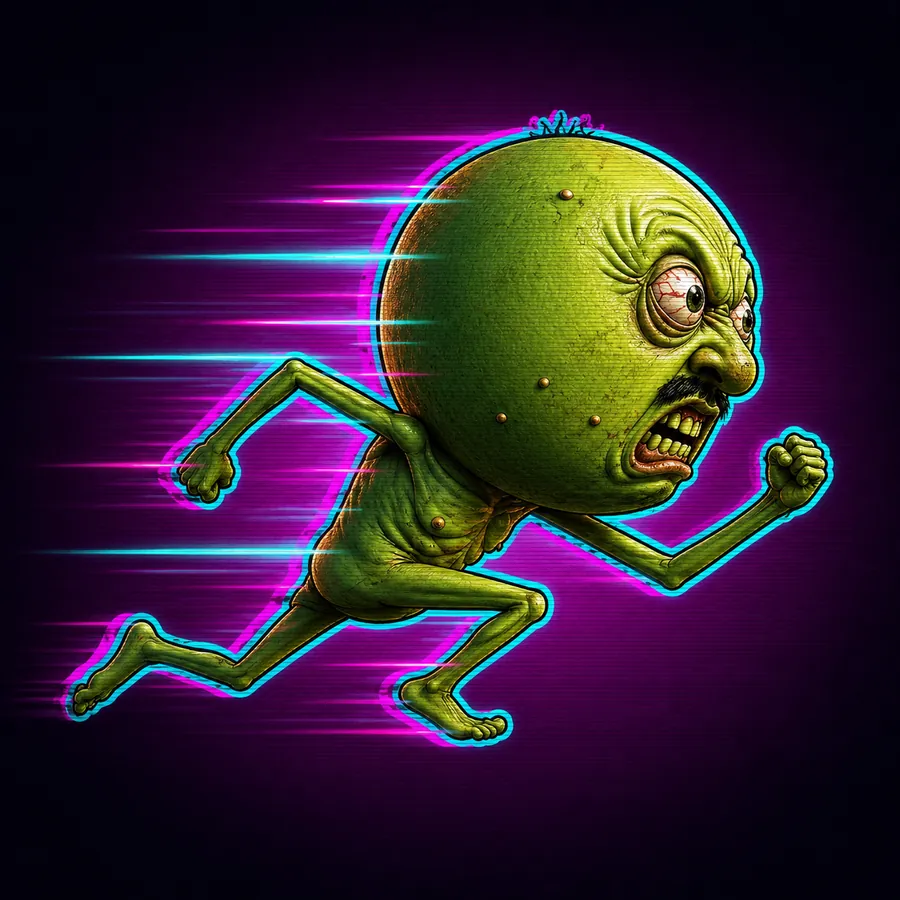
He is still running. He does not know the thread is dead.
He wants back on the timeline. That is all he has ever wanted, and it is the only thing he has ever asked anyone for.
What a meme actually is
The word was coined in 1976 by Richard Dawkins, in a book about genes. He needed a name for the smallest unit of culture that can copy itself from one mind to another — a tune, a phrase, a way of building an arch. His point was uncomfortable and still is: a meme does not spread because it is good. It spreads because it is easy to copy.
Those are different properties, and most people confuse them. Plenty of brilliant ideas die because repeating them requires effort. Plenty of stupid ones circle the planet for a decade because a child can redraw them from memory in ten seconds.
Rage comics lasted as long as they did for exactly that reason. Four panels, MS Paint, no drawing ability required, and a face so crude that copying it badly was part of the joke. The barrier to reproduction was effectively zero. That is not an insult — it is the whole mechanism.
Outside crypto, and inside it
The same object behaves differently depending on whether there is money attached to repeating it. This is the honest version of that difference, including the part that isn't flattering.
| Outside crypto | Inside crypto | |
|---|---|---|
| Why people post it | It says something they wanted to say, faster than words would | The above, plus they own it and posting it may raise the number |
| Who posts it | Anyone. Ownership is meaningless | Mostly holders. Ownership is the point |
| What kills it | Boredom. People stop reaching for it | The number falls, and the reason to post evaporates overnight |
| Typical lifespan | 2–5 years | 3–90 days |
| What's left after | A shared reference a whole generation still recognises | A chart, and a group chat nobody opens |
Lifespans are rough characterisations of observed behaviour, not measurements. Nobody has a clean dataset for this and anyone who tells you they do is selling something.
The part nobody says out loud
Attaching a token to a meme is genuinely an invention. It solves the oldest problem in internet culture — the people who make the thing everyone repeats get nothing — by making repetition itself pay.
It also breaks the thing it is trying to help. A meme that pays to be posted stops being a reaction and becomes a job. The posts get worse. The audience can smell it. And when the number falls, the meme does not gracefully decline the way rage comics did over four years; it evaporates in an afternoon, because the only reason most people were posting it just left.
That is the trade. Anyone launching a memecoin who pretends otherwise is either new or lying.
Where he sits in all this
BLOB RAGE is not a new character invented to have something to sell. He is the oldest kind of internet object there is: a face that got copied until it wore out, by people who never asked permission and never got paid.
He survived the first time because he was easy to draw. Whether he survives this time depends on whether people keep posting him after the novelty is gone — which is the same test he passed in 2009 and failed in 2012.
A meme does not die when people stop liking it. It dies when people stop posting it.